When the Earth's Frequency Shifts, You Feel It
Understanding Schumann Resonance and Why Your Nervous System Responds
You've Been Feeling It
You've been sleeping poorly. Anxious for no clear reason. Strangely wired, or inexplicably exhausted. Maybe both in the same day. You've checked the obvious things — stress, diet, sleep hygiene, hormones — and nothing fully explains it.
Here's what most people don't know: Earth has an electromagnetic pulse. And when it fluctuates, sensitive nervous systems feel it.
I started tracking Schumann Resonance charts years ago after noticing patterns in my own sleep and energy that didn't correlate to anything happening in my life. Nights I couldn't sleep despite being exhausted. Days I felt activated and anxious with no identifiable trigger. When I started cross-referencing these experiences with Schumann Resonance data, patterns emerged that I couldn't ignore.
Now I check the charts when clients report sudden onset symptoms that seem to come from nowhere — unexplained anxiety, sleep disruption, feeling "off" in ways they can't articulate. More often than not, the Schumann data shows something significant happening.
This guide will help you understand what the Schumann Resonance is, how to read the charts yourself, and most importantly — what to do when Earth's frequency shifts and your nervous system feels it.
What Is Schumann Resonance?
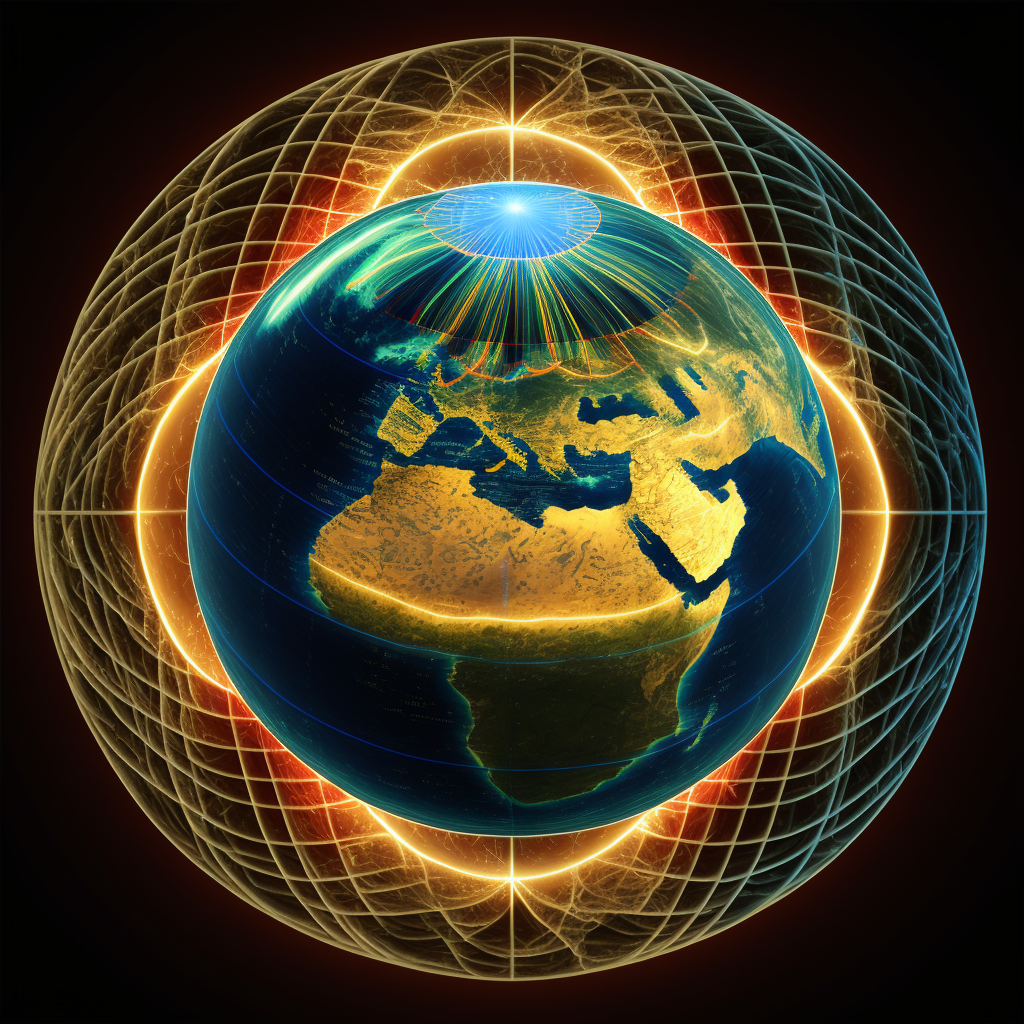
Schumann Resonance (SR) refers to natural electromagnetic resonances that occur within Earth's atmosphere. Discovered by physicist Winfried Otto Schumann in 1952, these resonances are caused by the interaction between Earth's surface and the ionosphere — the electrically charged upper layer of our atmosphere.
Think of it this way: Earth's surface and the ionosphere form a cavity, like the inside of a drum. Lightning strikes (about 50 per second globally) act like drumsticks, creating electromagnetic waves that resonate within this cavity. These standing waves pulse continuously around the planet.
The fundamental frequency is approximately 7.83 Hz, with harmonics at roughly 14, 20, 26, and 33 Hz. This is often called Earth's "heartbeat" — and it's been relatively stable for as long as we've been measuring it.
Until recently.
"The Earth's frequency or 'heartbeat' (Schumann Resonance) influences human brain activity and even human consciousness. It's a fascinating link between our brain and the natural world."
— Dr. Joe Dispenza
Why Your Nervous System Responds
Here's what makes the Schumann Resonance personally relevant: 7.83 Hz falls directly within the range of human brainwave activity.
Our brains produce electrical activity measured in hertz, just like the Earth's resonance. The Schumann fundamental frequency corresponds to the border between theta (4-8 Hz) and alpha (8-12 Hz) brainwave states — the zone associated with deep relaxation, light meditation, creativity, and the threshold between waking and sleeping.
Research suggests that human brainwaves can synchronize with external electromagnetic frequencies. When the Schumann Resonance is stable and matches our natural rhythms, many people report feeling grounded and balanced. When it fluctuates significantly — especially in amplitude and in the higher harmonics — sensitive nervous systems feel the disruption.
The Key Insight: You can't control Earth's electromagnetic environment. But you can understand how it affects you — and build nervous system capacity to hold more activation without destabilizing.
This is why some people seem unaffected by Schumann fluctuations while others feel every spike. It's not that the sensitive ones are broken — it's that their nervous systems are more finely tuned to environmental input. The goal isn't to stop feeling it. It's to build a container that can hold more without flooding.
How to Read Schumann Resonance Charts
Learning to read the charts yourself means you can check them when you're feeling unexplainably off — and either find a correlation (which is validating) or rule it out (which is also useful information).
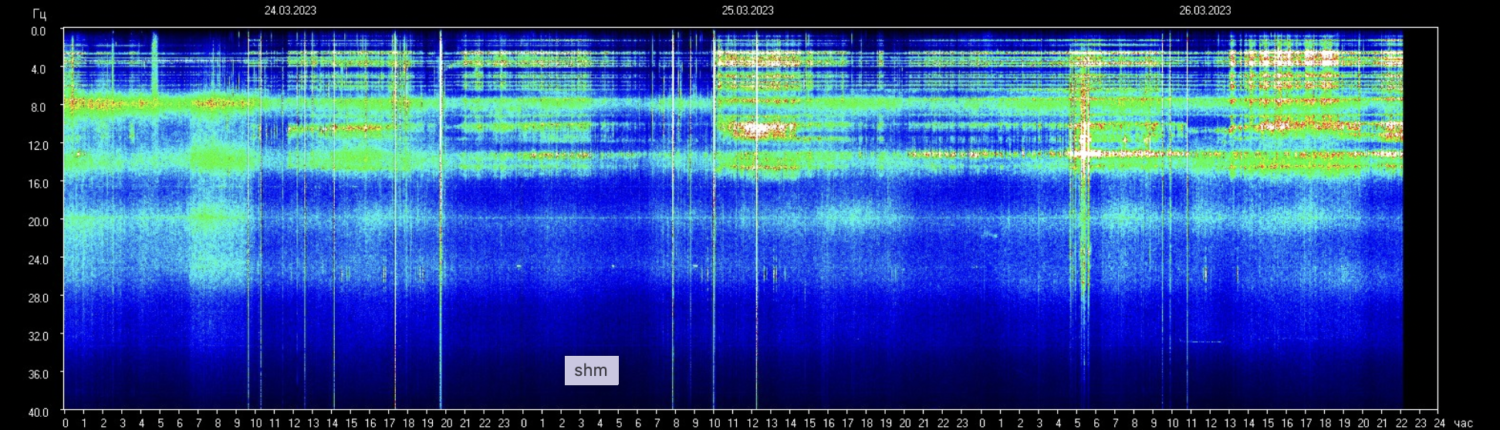
The basic Schumann Resonance spectrogram is a 3D graph:
- The x-axis represents time (hours)
- The y-axis represents frequency (hertz)
- The color represents amplitude — blues/purples for lower amplitudes, white for the highest
There are typically four bands visible on the main chart, called modes:
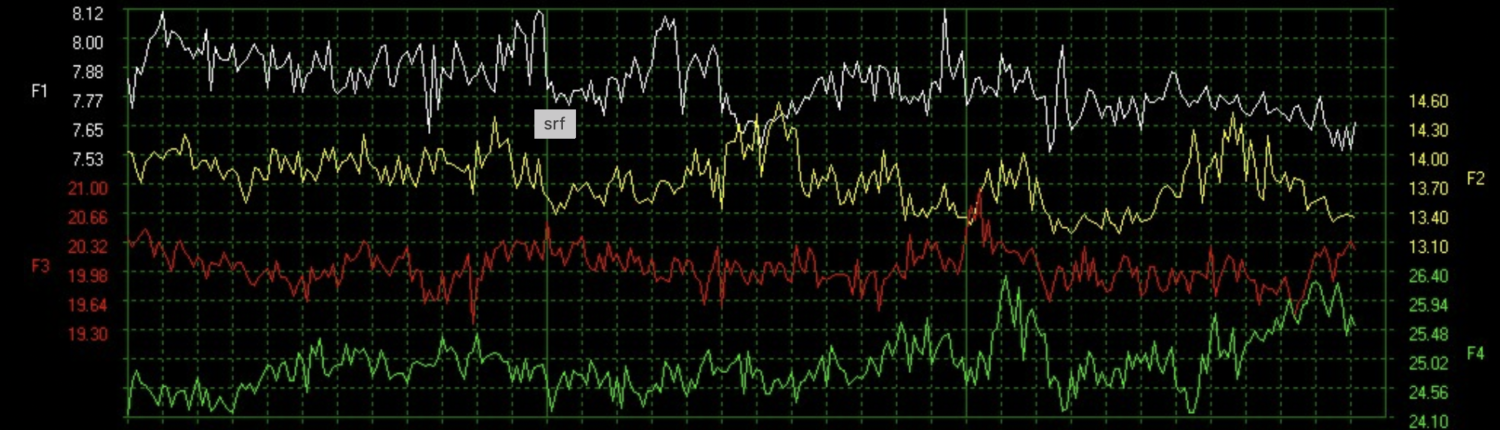
- Mode 1 (Fundamental): 7.53-8.12 Hz
- Mode 2: 13.10-14.60 Hz
- Mode 3: 19.30-21.00 Hz
- Mode 4: 24.10-26.40 Hz
Schumann Resonance Spectrogram
Amplitude
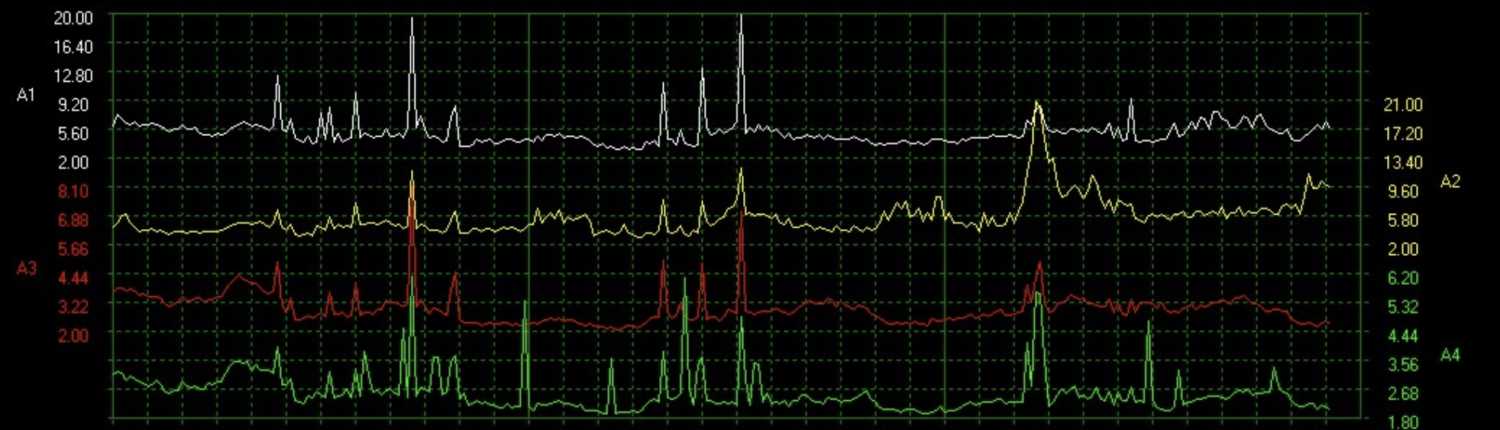
Frequency
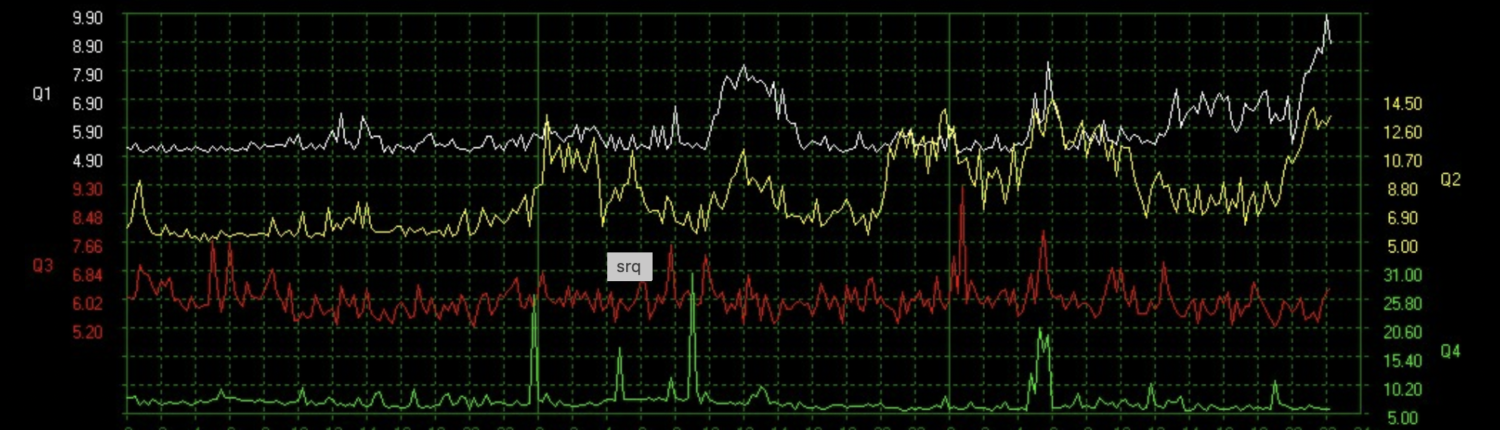
Quality (Q) Factors
What You're Looking For
Amplitude spikes: The intense white areas on the spectrogram represent high amplitude — significant power in the resonance. These often correlate with the days people report feeling "activated" or anxious.
Mode 2 activity: Pay attention to the 14 Hz band. When Mode 2 is unusually active relative to Mode 1, this can create a more stimulating, less restful electromagnetic environment.
Pattern disruption: A "normal" chart shows relatively consistent bands with gradual variations. Dramatic spikes, gaps, or unusual patterns often correlate with symptomatic days for sensitive individuals.
Learn More
I highly recommend Stefan Burns' video: How to Read Schumann Resonance Data.
To see the charts yourself, visit the Space Observing System webpage. (Note: the site is in Russian, so a Google Translate plugin may be helpful.)
What Causes Schumann Resonance Fluctuations
Earth Weather Events
Lightning is the primary driver of the Schumann Resonance. During intense thunderstorms, you'll see increased amplitude on the charts. The intense white spikes often correspond to severe weather events near the measuring station in Tomsk, Russia.
Seasonal and daily patterns also matter: thunderstorms are more common in summer and typically peak in late afternoon/early evening, creating predictable variations in the resonance.
Solar Weather
Solar activity significantly affects the Schumann Resonance:
- Solar flares release bursts of radiation that alter the ionosphere's composition and height
- Coronal mass ejections (CMEs) can cause geomagnetic storms that change the Earth-ionosphere cavity
- The 11-year solar cycle creates longer-term variations in resonance patterns
When you see unusual Schumann activity and there's no significant Earth weather explanation, solar weather is often the cause.
What This Means for You: During periods of high solar activity or geomagnetic storms, your nervous system may respond to electromagnetic changes you can't see or consciously perceive. If you notice patterns — feeling off during solar events, for example — that's valuable self-knowledge.
Is the Schumann Resonance Changing?
In recent years, there has been a significant increase in Mode 2 (14 Hz) activity relative to the fundamental mode of 7.83 Hz. This shift matters because different frequencies correspond to different brain states — and different nervous system responses.
Here's Why This Matters:
The 7.83 Hz fundamental frequency corresponds to the theta-alpha border — associated with relaxation, meditation, and parasympathetic (rest-and-digest) activation.
The 14-15 Hz range corresponds to low-beta waves — associated with active thinking, alertness, and sympathetic (fight-flight) activation.
When Mode 2 activity increases relative to Mode 1, the electromagnetic environment becomes more activating and less restful.
What This Might Mean
- More activation, less rest: If you've noticed that deep relaxation is harder to access than it used to be, this could be a contributing factor.
- Sleep disruption: Beta frequencies don't support sleep. Increased Mode 2 activity, especially at night, may contribute to the sleep issues so many people report.
- Harder to access trance states: If you regularly tap into theta states for meditation, guidance, or intuitive work, you may find this more difficult during high Mode 2 periods.
- More anxiety and restlessness: Sympathetic activation without a clear cause. Your nervous system is responding to something real — it's just electromagnetic rather than psychological.
This is why your nervous system capacity matters more than the charts. You can't control Earth's electromagnetic environment — but you can expand your system's ability to hold more activation without flooding.
Go Deeper
Stefan Burns' video: Schumann Resonances ARE RISING explores this shift in detail.
How Fluctuations Impact You Physically
Not everyone experiences Schumann fluctuations consciously. But for those who do, these are the common patterns:
- Sleep disturbances: Difficulty falling asleep, restless sleep, waking at unusual hours, or feeling unrested despite adequate sleep time
- Unexplained anxiety: Feeling activated, anxious, or "wired" without a psychological trigger
- Fatigue or exhaustion: Your body may be working harder to regulate in a fluctuating electromagnetic environment
- Headaches or pressure: Some people report head pressure or headaches during high-amplitude periods
- Cognitive fog: Difficulty concentrating, memory issues, or feeling mentally "off"
- Mood shifts: Irritability, emotional sensitivity, or feeling destabilized without clear cause
- Physical restlessness: Feeling like you need to move, difficulty sitting still, nervous energy
Know Your Patterns: If you're someone who feels approaching thunderstorms, is affected by full moons, or notices energy shifts that others don't — you're likely sensitive to electromagnetic changes. This isn't a flaw; it's information about how your system works.
The question isn't how to stop being sensitive. It's how to support your system when the environment is activating.
What to Do When You're Feeling It
When Schumann fluctuations are affecting you, these practices can help your nervous system regulate. They won't change the electromagnetic environment — but they can help your system hold the activation without flooding.
Immediate Regulation Tools
Extended exhale breathing: Breathe in for 4 counts, out for 6-8 counts. The longer exhale activates the parasympathetic nervous system, counterbalancing the sympathetic activation that Schumann spikes can trigger.
Grounding — literally: Bare feet on earth, grass, or sand. Direct contact with the ground helps discharge excess electrical energy and regulate your system. This isn't just metaphor — earthing research shows measurable physiological effects.
Orient to your environment: Slowly look around the room, letting your eyes rest on objects. Name what you see. This simple practice activates the ventral vagal system and signals safety to your nervous system.
Cold water: Splash cold water on your face or run cold water over your wrists. This activates the dive reflex and can quickly shift your nervous system state.
Movement: Walk, shake, stretch. Your body may be holding activation that needs to discharge. Bilateral movement (walking, swimming) is particularly regulating.
Ongoing Support
Track your patterns: When you feel off, check the Schumann charts. Over time, you'll learn your own sensitivity and be able to anticipate challenging periods.
Adjust expectations: On high-fluctuation days, you may need more rest, less stimulation, and more self-compassion. This isn't weakness — it's intelligent adaptation.
Limit additional activation: Caffeine, intense exercise, and screen time all add to sympathetic activation. During Schumann spikes, you may need less of these.
Go Deeper
Visit The Map to understand nervous system states and why regulation matters. The same tools that help with emotional activation help with electromagnetic activation — your nervous system doesn't distinguish the source.
Schumann Resonance and Spiritual Awakening
Some perspectives suggest that the Schumann Resonance functions as a kind of "tuning fork" for human consciousness — that synchronizing our brainwaves with Earth's natural frequencies supports states of meditation, intuition, and expanded awareness.
This makes sense when you consider that 7.83 Hz falls in the range associated with:
- Deep relaxation and light meditation
- Enhanced creativity and intuition
- Access to subconscious material
- Reduced mental chatter
- Heightened perception
Indigenous Knowledge and Lightning Initiation
Indigenous traditions worldwide have noted connections between lightning, electromagnetic phenomena, and spiritual initiation. Shamans in many cultures are said to receive their calling or powers through lightning strikes — a recognition that electromagnetic events can catalyze transformation.
In many indigenous societies, shamans are revered as special spiritual beings who can bridge the gap between the material and spiritual worlds. The lightning strike initiation is regarded as transformative, symbolizing the shaman's connection to nature's powerful forces and their aptitude for channeling that energy for healing and spiritual guidance.
While there is no direct scientific evidence connecting Schumann Resonance to shamanic initiation, it's intriguing that both emphasize the interconnectedness between humans and Earth's electromagnetic environment. The Schumann frequencies fall within the spectrum of human brainwave activity — especially in alpha and theta states associated with meditation and heightened perception. It's conceivable that shamans, renowned for their capacity to enter altered states, may be particularly sensitive to these frequencies.
Whether you view the Schumann Resonance through a scientific or spiritual lens (or both), the practical reality is the same: Earth's electromagnetic environment affects human nervous systems, and some people are more sensitive to this than others.
If you're someone drawn to this topic, you're probably someone who feels these shifts. That sensitivity is an asset for spiritual and intuitive work — and it also means you need to take your nervous system regulation seriously.
The Scientific Foundation
For those who want the research backing: N.J. Cherry's paper "Human Intelligence: The Brain, an Electromagnetic System Synchronized by the Schumann Resonance Signal" examines the relationship between Earth's resonance and human brain activity. The research suggests that the human brain is an electromagnetic system that resonates with the Schumann frequencies, with potential implications for intelligence, consciousness, and wellbeing.
Additional research by Pobachenko et al. (2006) found correlations between human encephalogram parameters and Schumann Resonance electromagnetic fields, supporting the idea that our brains respond to Earth's electromagnetic environment.
This isn't fringe science — it's an emerging area of research with implications for understanding how environmental factors affect human physiology and mental states.
You Can't Control the Frequency. You Can Build Your Container.
If you're someone who feels Schumann shifts — and you probably are, or you wouldn't have read this far — the question isn't how to stop the fluctuations. It's how to build a nervous system that can hold more without destabilizing.
The regulation tools above help in the moment. Building lasting capacity is different work.
Terrain Session
See where your system is resourced and where it's vulnerable to external activation. Understand what your nervous system needs to hold more — whether the activation comes from life stress, electromagnetic fluctuations, or energetic sensitivity.
Learn More →Somatic Breathwork
Build capacity for intensity and develop embodied tools for regulation. Breathwork trains your nervous system to move through activation and return to baseline — exactly what you need when external frequencies are spiking.
Book Session →Related Reading
Earthing and Grounding Benefits — How direct contact with Earth helps regulate your nervous system during electromagnetic fluctuations.
The Map — Understand nervous system states and regulation.
Kundalini and Your Nervous System — Another form of energetic activation and how to navigate it.
References
- Schumann, W. O. (1952). Über die strahlungslosen Eigenschwingungen einer leitenden Kugel. Zeitschrift für Naturforschung A, 7(2), 149-154. doi.org
- Dispenza, J. (2017). Becoming Supernatural: How Common People Are Doing the Uncommon. Hay House.
- Cherry, N. J. (2002). Human intelligence: The brain, an electromagnetic system synchronised by the Schumann Resonance signal. Medical Hypotheses, 58(6), 462-469. doi.org
- Persinger, M. A. (1995). On the Possibility of Directly Accessing Every Human Brain by Electromagnetic Induction. Perceptual and Motor Skills, 81(1), 999-1017.
- Pobachenko, S. V. et al. (2006). The Contingency of Parameters of Human Encephalograms and Schumann Resonance Electromagnetic Fields. Complex Systems Biophysics, 51(5), 480-483.
- Global Coherence Initiative. Schumann Resonances. heartmath.org
Bookmark This Guide
Save this for those mornings when you wake up wired for no reason. Check the charts. See if it correlates. And if it does — you'll know you're not imagining it.
Support This Work
If you found value in this guide, you can support the creation of more free resources:






Leave a Reply
Want to join the discussion?Feel free to contribute!