Who’s Looking Through the Keyhole? — The Sacred Imagination, Part 2
Who’s Looking Through the Keyhole?
The Sacred Imagination, Part 2
This post builds on Part 1 of this series — if you haven’t read that yet, start there first.
In my previous post, I laid out the spectrum between delusion, fantasy, and the sacred imagination. Additionally, I talked about how nervous system regulation is one of the prerequisites for accessing sacred truth—because states of fight, flight, freeze, or fawn impair our ability to perceive clearly.
However, something was missing from that explanation. I’ve been sitting with this question for a while now, and it finally crystallized during a recent journey.
Here’s the piece I left out: It matters which part of you is doing the looking.

The Keyhole and the Window
Think of perception as looking through an aperture—an opening that can narrow or widen depending on your state.
When we’re dysregulated, that opening shrinks to a keyhole. Specifically, one part of us—usually the part tasked with survival—grips the frame and peers through, scanning for threat. This isn’t a design flaw, though. When there’s an actual tiger, you don’t want a committee meeting. Instead, you need focused attention, fast decisions, and singular action. As a result, the narrowing serves survival.
When There’s No Tiger
The problem is that this same narrowing happens when there’s no tiger. Consider the email from your boss, the weird silence from your partner, or the memory that surfaces uninvited. Your nervous system doesn’t always distinguish between mortal threat and emotional discomfort. Consequently, it responds to felt danger rather than verified danger.
So we end up looking through keyholes when windows would serve us better.
What Happens When We Regulate
When we regulate—when the nervous system settles back into the ventral vagal state, into social engagement and presence—the aperture widens. In other words, the keyhole becomes a window. Importantly, this isn’t just metaphor; it’s supported by research.
Stephen Porges’s work on polyvagal theory shows that when our nervous system detects safety, we gain access to states that support “trust, cooperation, curiosity, and learning.” Similarly, Barbara Fredrickson’s broaden-and-build research demonstrates that regulated, positive emotional states literally expand our scope of attention and cognition. As a result, we see more, consider more options, and think more flexibly.
The Key Insight
Regulation doesn’t push the survival system aside. Rather, it widens the opening so that part can stay present while other parts join the view.
Why “Just Relax” Doesn’t Work
This is why “just relax” doesn’t work. It’s also why forced calm usually backfires. You can’t widen the window by shoving parts out of the way because the survival system will fight harder for control if it feels excluded. However, if it can still see—if its concerns are still registered, its vigilance still honored—it can relax its grip. Not because it’s been defeated, but because it’s been included.
The Observer Shapes the Observation
So here’s the question that changes everything: Who’s standing at that aperture?
Imagine you’re in journey, in meditation, in that liminal space where images and insights arise. Something appears—a vision, a message, a felt sense of something beyond ordinary perception.
Is it real? Is it true? Or are you just making it up?
I’ve asked myself this question hundreds of times. Recently, however, I realized I was asking the wrong question entirely. The better question is: Which part of me is looking?
The Wound at the Aperture
Perhaps it’s the scared five-year-old, wanting a distraction from the dark. Maybe that part wants the safe arms of a protector, a story that soothes.
Or perhaps it’s the part that has done the work, metabolized the fear, and can meet what arises with curiosity rather than need.
When a wound takes a look through the keyhole, what you’re getting is a fantasy. The wounded part isn’t lying to you—rather, it’s showing you what it needs, what it fears, what it’s protecting. There’s information there, but it’s diagnostic information. In essence, the keyhole has become a mirror, reflecting back the wound’s unmet needs rather than showing you what’s beyond the veil.
When you show up to that aperture regulated—not in wound, not in defense—the story you’re witnessing is more likely to be true, however fantastical it appears.
The Universe Is Wired Toward Fantastical
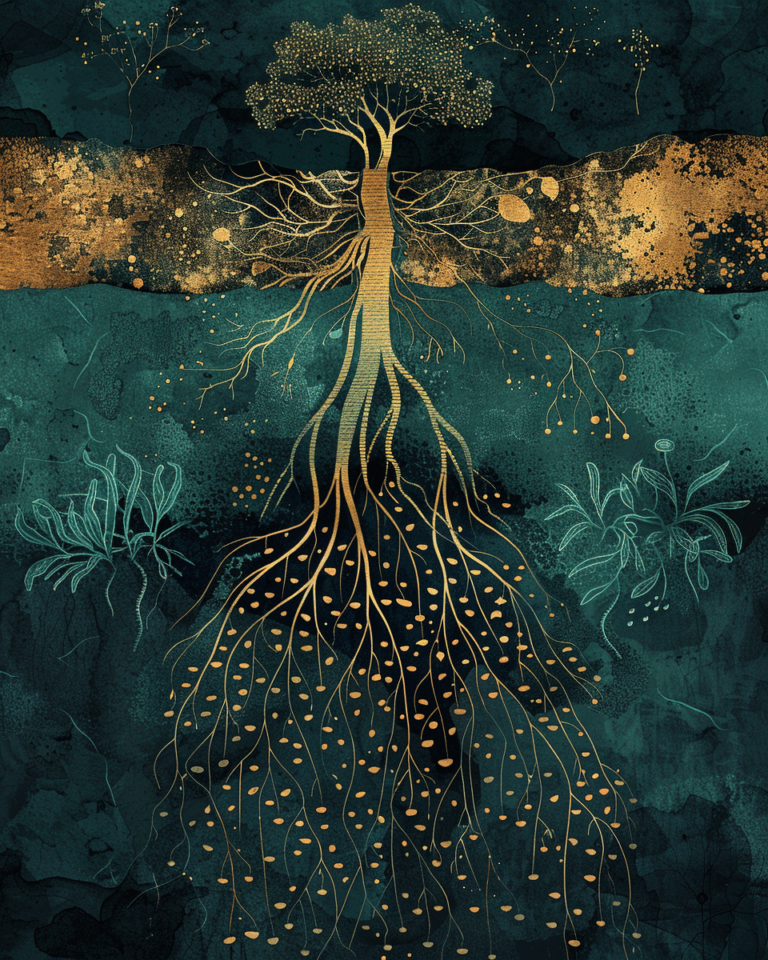
And here’s the thing: the universe is wired toward fantastical. Have you looked around at this world? There are bioluminescent oceans. There are mycorrhizal networks where trees communicate through fungal threads. Octopuses are editing their own RNA. Therefore, the apparent strangeness of what you perceive might actually be evidence for its truth, not against it.
How Do You Know Who’s Looking?
This is where people go sideways. It’s one thing to understand the concept—wounded parts distort perception, while regulated presence allows clarity. But how do you actually know which state you’re in? Fortunately, there are several reliable indicators.
Your Questions Tell You
Here’s something I’ve discovered through years of practice: the type of question you’re able to form is diagnostic of your state.
When I’m activated—when that defense system has the frame—I notice I reach for yes/no questions. For instance: Is this true? Should I do this? Is this person safe? These questions are binary, simple, and reducible to two options.
This makes perfect sense from a survival standpoint. When there’s a tiger, you can’t evaluate seventeen options. You need two: fight or run. The activated brain simplifies because it has to. It reduces the world to yes/no, safe/dangerous, good/bad. Then it decides and acts.
But here’s the problem: that same narrowing that serves survival cannot hold truth, because truth is rarely binary.
When Yes and No Both Appear
I’m clairaudient—I hear guidance. I’ve noticed that when I ask yes/no questions from an activated state, I often hear both answers: yes and no. This used to frustrate me until I understood that the question itself is malformed. It’s too narrow to hold what’s actually true. The guidance isn’t being evasive—instead, it’s saying, You’re looking through a keyhole. This answer requires a window.
When I’m regulated, by contrast, I can form open questions. For example: What do I need to understand here? What is this showing me? What wants to emerge? These questions don’t demand binary answers. Instead, they can hold complexity, paradox, both/and.
The capacity to form open questions might itself be a marker of regulation.
Your Body Tells You
I don’t always notice that I’m activated. But when I do notice, there’s a physical signature—a knot, a pain, something that feels like a large burr caught in my chest cavity.
When Defense System Has the Frame
- Breathing is shallow, held, or rapid
- Body is braced—tension in jaw, shoulders, belly
- Leaning forward, almost grasping
- A sense of urgency—need to know, need to act
When You’re Showing Up Regulated
- Full breaths reaching the belly
- Weight dropping into the seat, feet feeling the floor
- Relaxed face, soft eyes
- Spaciousness in the chest
- Can wait—no urgency driving the inquiry
I’ve learned that when I notice I’m asking yes/no questions, that’s my cue to pause and check my body. Binary question = likely activated = check for the knot = regulate before continuing. In this way, the question type becomes an early warning system.
The Content Itself Tells You
What you receive also carries markers of who was looking. Below are some patterns to notice.
Content Filtered Through the Wound
- Confirms exactly what you feared OR exactly what you hoped (suspiciously convenient)
- Has a “too good to be true” or “worst fears confirmed” flavor
- Feels soothing in a way that matches a specific unmet need
- Appears dramatic, elaborate, highly specific in ways that serve your narrative
- Flatters you or catastrophizes
Content Received from Regulated Perception
- Surprises you—goes against expectation
- Appears simpler, less dramatic
- Has a quality of “huh, interesting” rather than relief or dread
- Doesn’t need to be anything in particular
- May be uncomfortable but not destabilizing
For those who receive visual information: fear changes both perception AND interpretation. You’re not just seeing scarier images—you’re making meaning of neutral images through a fear lens. Consequently, the same vision could mean two entirely different things depending on who’s looking.
How You Hold It Tells You
Finally, notice how you relate to what you’ve received.
When the Wound Did the Looking
- You need it to be true (or fear it’s true)
- Questions feel threatening—you get defensive
- Urgency to tell someone, get validation
- Can’t sit with uncertainty about it
- Attached to the vision being right
When You Witnessed from Regulation
- Can hold it lightly
- Questions feel like refinement, not attack
- No rush to validate externally
- Can sit with “I don’t know what this means yet”
- Curious rather than certain
Remember what I wrote in the first post: sacred truth doesn’t need external validation. That might be one of the clearest tests. When the wound does the looking, there’s often an immediate pull to tell someone, to have them confirm what you saw. The wound needs a witness to its vision because it’s uncertain. Regulated perception, on the other hand, can wait. It can hold the content alone. It doesn’t need agreement to feel stable.
The Defense Survival Network
Let’s name what’s actually happening when we’re dysregulated.
What we often separate into different concepts—the wound, the shadow, the ego—operate in practice as a single system. Call it the defense survival network. The wound is what’s being protected. Meanwhile, the shadow is what’s being kept hidden. And the ego is what’s being defended. These are three faces of the same creature.
Why This Matters for the Sacred Imagination
This creature isn’t malevolent. On the contrary, it’s doing exactly what it was designed to do: keep you alive, keep you functioning, keep the unbearable at bay until you have the capacity to bear it.
But when this network is running the show, it determines what you see. It narrows perception to threat-scanning. It filters everything through the question: Is this dangerous? What do I need to do?
The sacred imagination can’t operate fully through that filter. Not because the defense system is bad, but because its job is different. It’s scanning for threat in a realm that isn’t organized around threat. Essentially, it’s bringing survival-brain to a space that requires something else entirely.
Why Regulation Widens the Sacred Imagination
Regulation and aperture-widening aren’t two separate things. They’re the same phenomenon, described differently.
When your nervous system shifts toward regulation—toward ventral vagal, toward presence—the aperture widens automatically. You don’t regulate AND THEN widen perception. Instead, the regulation IS the widening.
Dysregulated = narrow aperture = keyhole = defense survival gripping the frame = yes/no questions = binary perception
Regulated = wider aperture = window = defense survival relaxing because it’s still included = open questions = capacity for complexity
Same phenomenon. Different facets of the same diamond. This is why the sacred imagination depends so completely on nervous system state.
Building Capacity Over Time
Now here’s where it gets hopeful.
When you first practice regulation and the window widens, it doesn’t stay wide. Activation happens, the aperture narrows, and defense survival grips the frame again. That’s normal. In fact, that’s not failure at all.
But something has been learned.
How the System Remembers
The nervous system got new data. It experienced sharing the view without catastrophe. And when the next activation comes, the narrowing might not be quite as severe. The system remembers. The frame has been stretched. There’s a whisper now: Last time we shared the view and nothing terrible happened.
The Good News
Each time you regulate, widen, encounter something, narrow, regulate again—you’re building capacity. The baseline aperture itself shifts over time. What used to require concentrated effort becomes your new normal. The window’s resting state gets larger.
It’s like stretching fascia. It doesn’t just bounce back to exactly where it was. Something has changed in the tissue itself.
You can still narrow under threat—that capacity remains, appropriately. But the snapback point has moved. As a result, the place you return to is wider than it used to be.
The Natural Rhythm
Here’s what I find beautiful about all this: these aren’t techniques we invented. They’re how living systems already work.
The pupil titrates light—opening and closing to let in the right amount. Similarly, the breath pendulates—expanding and contracting in natural rhythm. Likewise, attention naturally narrows and widens based on what’s needed.
The body already knows this rhythm. The narrowing and widening, the oscillation between focused and expanded states—this is native intelligence. Trauma and chronic stress override it, yes. But the capacity isn’t gone. It’s waiting.
What Regulation Actually Restores
Regulation isn’t adding something new to your system. Instead, it’s restoring your organism’s natural capacity to modulate its own perception.
The sacred imagination isn’t a supernatural faculty you have to develop from scratch. It’s what perception does when it’s not hijacked. It’s what was there all along, underneath the defense system’s grip on the frame.
So What Do We Do?
If you’re trying to access the sacred imagination—trying to perceive beyond the veil, receive guidance, connect with something larger—here’s what I’d offer:
- Regulate first. Not because your survival system is the enemy, but because it needs to know it can relax its grip without being exiled. Use whatever works for you—breath, movement, cold water, co-regulation with a safe other. Widen the aperture before you start looking.
- Notice your questions. Are you reaching for yes/no? Binary? That’s diagnostic. Pause. Find your feet. Breathe. Then see if you can open the question before you ask it.
- Check your body. Is there a knot? Tension? Urgency? That’s the defense system gripping the frame. It’s not wrong—it’s information. Tend to it before you continue.
- Let the keyhole be diagnostic. If you realize a wound is doing the looking, don’t dismiss what you see. Instead, ask: what is this part showing me about what it needs? The fantasy isn’t useless—it’s a map of unmet needs.
- Trust the fantastical. If you’re regulated, if you’ve done the work, if you’re showing up with curiosity rather than need—trust what you perceive, even when it seems strange. Especially when it seems strange. The universe is far more fantastical than we’ve been taught to believe.
- Practice the rhythm. Widen, narrow, widen again. This isn’t failure—it’s how capacity builds. Each cycle stretches the aperture’s resting state a little wider.
We’ve been taught that the imagination is the realm of “not real.” That’s backwards.
The imagination—the sacred imagination—is a perceptual organ. It can be clouded or clear, distorted or accurate, depending on the state of the one perceiving. The imagination isn’t the source of unreality. The wound looking through it is.
Learn to regulate. Learn to notice who’s looking. Learn to trust what you see when you’re showing up whole.
The window is already there. You’re just remembering how to open it.
What to Do Next
If you’re recognizing that a wound has been doing the looking—if you’re seeing patterns you can’t shift, receiving guidance you can’t trust, or feeling lost in the long middle of transformation—here’s where to start:
See Where You Actually Are
Take the free Phase Assessment to understand which phase of capacity-building you’re in before seeking more input.
Take the Assessment →Map What’s Operating
A Terrain Session helps you see exactly which parts have been gripping the frame—and what they’ve been protecting.
Learn About Terrain Sessions →The window is already there. Sometimes you just need someone to help you find it.
View All ServicesBookmark This
Save this for when you’re questioning whether what you perceived was real. You’ll want it at 3am when the doubt sets in.