


There’s a moment in every healer’s journey where the calling arrives. Something broke open in you. Grief, trauma, addiction, betrayal, illness. In the breaking, you touched something real. You felt the architecture of suffering from the inside. You understood it in your body, not from a textbook. And then something in you said: I want to help other people through this.
That impulse is sacred. I mean that. The desire to transmute pain into service is one of the most beautiful things a human being can do. And if you’ve walked through fire to get here; if you’ve survived something that should have flattened you and came out the other side with your eyes open, that capacity is real. It matters. It’s the raw material for everything that follows.
But here’s the thing. The wound is not the medicine. I’ve learned this the hard way, in my own practice, more than once. The wound is raw material. The medicine is what happens when we do the work of turning it into something we can actually offer without bleeding on the people we’re trying to help.
The Difference Between Wounded and Integrated
Every healer carries wounds. That’s not the problem. The problem is when we teach from wounds that are still running the show. Patterns we haven’t fully seen. Grief we haven’t metabolized. Relational dynamics we haven’t untangled. When that happens, we don’t hold space. We take space. We project. We unconsciously recreate our own unfinished business in the container we’ve built for someone else’s healing.
I’ve done this. Sat in the facilitator’s seat thinking I was clean on something, only to realize later that my own pattern was shaping what I could see and what I missed. If you’ve been doing this work long enough, you know exactly what I’m talking about. That humbling moment when you catch it.
An integrated wound says: I’ve been through this. I’ve sat with it. I understand its architecture, and I’ve done enough work that I can be present with you in yours without my stuff running the session.
An active wound says: I’ve been through this, and I’m still in it, and I may not even know how much it’s shaping what I see and what I miss.
Every healer lives somewhere on that spectrum. The question isn’t whether we have wounds. The question is whether we’ve done the honest, unglamorous work of looking at them clearly enough to know the difference.
And here’s the part that’s easy to skip over: most of us live in the middle for a long time. Years, sometimes. We’ve gained enough awareness to see our patterns (sometimes while they’re running, sometimes an hour later, sometimes a week later) but we can’t reliably interrupt them yet. We know intellectually what we “should” do differently, but when activation hits, the old patterns still fire.
That middle space isn’t failure. It’s the actual terrain. Yet the temptation, especially for those of us who facilitate, is to mistake our awareness of a pattern for integration of it. To think that because we can name it, we’ve metabolized it. To teach from a wound we’ve intellectualized but haven’t yet moved through our body.
What the Deep Work Actually Looks Like
This is the part we don’t talk about enough in healing spaces. We talk about the breakthrough. The certification. The calling. We don’t talk about the floor.
I wasn’t prepared for what I found when I went in. I think more of us need to say that out loud.
It starts with something your body knows before your mind does. A place in your practice where you notice you’re avoiding. A topic that makes you subtly tighten. A client dynamic that hooks you in ways you can’t quite explain. A pattern in your relationships that keeps showing up wearing different faces.
The deep work means turning toward that. Not intellectually. You probably already understand it intellectually; that’s the trap. Many of us have done extensive cognitive work: therapy, reading, training, certification, deep thinking about our patterns. The result is that we can articulate what happened to us and why. Name the wound with precision. And then mistake that articulation for integration.
But understanding a pattern and metabolizing it are two different things. One lives in the mind. The other lives in the body. If we’ve only done the work from the neck up, we’re still teaching from an active wound — just with better language for it.

Where the Body Takes Over
The bottom-up work is where it gets real. Somatic. Breathwork. Ceremony. These are the modalities that bypass the story and go straight to where the wound actually lives. That’s where the shaking starts. The flooding. The freeze.
What matters is that those responses aren’t just symptoms. They’re communication. When the body shakes, it’s discharging energy that’s been held, sometimes for years, sometimes for generations. When it freezes, it’s saying this is too much, too fast; I need to go slower. And when it floods, it’s releasing what the mind has been managing but the body has been storing. I remember the first time my body did something I didn’t authorize. Something between a convulsion and a surrender. I didn’t know whether to be terrified or grateful. Both, it turns out.
Without the ability to read those signals in our own body, we can’t read them in our clients’. As Peter Levine’s work on somatic experiencing has shown, the body holds what the mind cannot fully process, and healing requires meeting the body where it is. If we’ve never sat with our own freeze, our own flood, our own shaking; if we’ve never been the one on the floor wondering what is happening to me, we don’t yet have the embodied authority to hold that space for someone else.
What It Feels Like (Not What You’d Expect)
This part doesn’t feel like healing. Instead, it feels like the thing you’ve built your identity around (your competence, your insight, your ability to hold space) suddenly isn’t solid ground anymore. It feels like sitting in a room with your own patterns and realizing they’ve been running longer and deeper than you thought. Grief. Rage. Sometimes nothing at all, which is its own kind of terrifying.
If this isn’t happening; if you’re not periodically finding yourself in the muck, humbled, seeing something you didn’t see before, you might be skimming across the surface. That’s not a judgment. It’s an invitation. Because the surface work will only take your clients as far as you’ve gone yourself.
I recently watched this happen with someone I care about. A powerful healer in her own right, she sat with a pattern for weeks, resisted it, got angry at the mirror, set it aside. Then one day, after other work had cracked something open, she came back to it and it landed completely differently. She found the thread herself. Traced it back through her lineage: her mother, her grandmother, probably further. The insight she arrived at was so simple it was almost invisible to anyone else, but for her, it was the code that had been running underneath everything.
Nobody could have handed that to her. She needed the mirror first. She needed time. And she needed the courage to come back to something that had initially made her angry.
That’s what integration actually looks like. Not a weekend. Not a certification. Not a single cathartic experience. It’s the willingness to stay in the conversation with your own material, over months, over years, until the body releases what the mind understood long ago.
The Honest Inventory

If you’ve been doing this work for a while, you might be reading this thinking I know. And you might be right. But knowing it and practicing it are different things. If you’re someone who’s been around the block enough times to feel a little fatigued by one more person telling you to look at your wounds, I want to offer something more practical than insight.
Some of us don’t need more awareness. Instead, we need tools for honest self-assessment. We need practices, not more mirrors.
So here’s the inventory. Not a checklist. A practice.
Four Questions Worth Sitting With
Where in your facilitation do you notice charge? Not the satisfying kind. The kind that tightens you. A client dynamic that hooks you. A topic where you find yourself pushing harder than the moment calls for, or pulling back when staying present is what’s needed.
When was the last time you were the client? Not reading a book, not attending a workshop as a peer. Actually sitting in the seat of someone who doesn’t know the answer yet. Being seen, not seeing.
What do you avoid? And (this is the harder question) is that avoidance wisdom or protection? Because those are different things, and the distinction matters. Sometimes we step back from a space because our system genuinely knows it’s not time yet. That’s discernment. The body’s intelligence protecting us from going too deep too fast. On the other hand, sometimes we step back because looking at it would require us to change something we’re not ready to change. The first is sacred. The second is comfortable. Only honest self-inquiry, ideally with someone who isn’t invested in our comfort, can tell us which one is operating.
Can you name, specifically, what your experience has taught you and what it hasn’t? Not in a general “we’re all learning” way. Concretely. What spaces are you equipped to hold? What spaces are you not? Are you honest about the difference with the people who trust you?
Knowing What We Can and Can’t Hold
Not every wound qualifies us to hold every space.
Our experience of suffering is real and valid. Yet it is also specific. If we’ve never navigated something from the inside; if we don’t carry it in our body, in our nervous system, in the particular texture of our lived experience; there are spaces we may not be equipped to hold. No matter how much empathy or training we bring.
This isn’t a limitation. It’s discernment. The difference between “I can hold space for this” and “I should hold space for this.”
I know my own edges. There are spaces I won’t facilitate. Not because I lack skill, but because I lack the embodied experience to truly understand what the people in that room are traversing. I can empathize. I can study. I can care deeply. However, caring deeply is not the same as knowing. And the people in that room deserve someone who knows.
This kind of self-honesty is rare in our field. It’s much easier to say yes to everything, to let the desire to serve override the question of whether we’re the right person to serve here, in this way. But the willingness to say “this isn’t my space to hold” is itself an act of integrity. Often, it’s the most healing thing we can offer.
The Ongoing Work
This isn’t about arriving. There’s no summit where integration is complete and we get to stop looking. I’m still in this process. Every practitioner I deeply respect is still in this process. The middle is long. It’s where the real work lives.
So what does it look like in practice? First, we can stay in our own process — not just cognitively, but somatically. Keep doing the body-level work that puts us back in the seat of not-knowing. Keep finding the layers underneath the layers we thought we’d finished with.
Second, we can find our own mirror. Work with someone who will tell us the truth. Not someone who will affirm our calling without examining our readiness. Because the work of integration often requires another set of eyes: a practitioner, a mentor, a framework that can show us what we can’t yet see on our own.
And finally, we can let the timeline be what it is. Integration doesn’t happen on our schedule. It happens when the system is ready, and sometimes the system needs to resist something before it can receive it. That’s not failure. That’s how deep change works.
The world needs healers. Desperately. The calling to serve is real and it matters. But the calling is the beginning, not the credential. The wound is the raw material, not the medicine. The medicine is what we make of it. If we’re willing to go all the way through.
Save This
Bookmark this for the next time you’re preparing to facilitate and something feels off. Come back to the inventory. It’s a practice, not a one-time read.
If This Landed
This piece speaks to practitioners, but the work underneath it is universal. If you’re ready to look at your own patterns with honest support, here’s where to start.
The Terrain Session
A deep-dive into the patterns running underneath your surface story. AI-assisted pattern analysis meets practitioner wisdom. 90 minutes.
Learn More →Phase Assessment
Not sure where you are in this process? A free assessment that shows you where your capacity actually lives, no guessing.
Take the Assessment →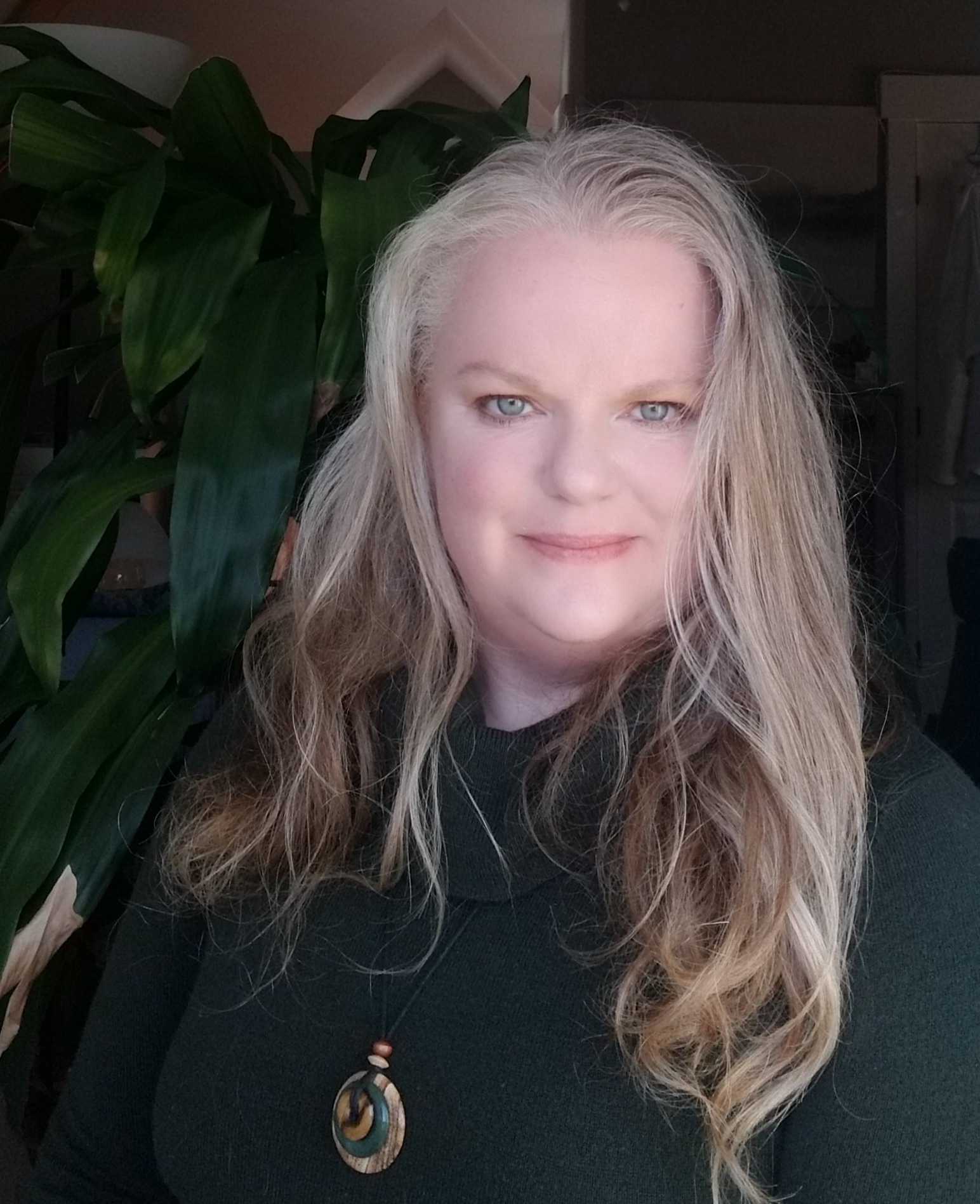
Sheila Rumble
Sheila offers Terrain Sessions, nervous system regulation, breathwork, QHHT, and somatic practices rooted in pattern analysis and embodied healing work in Charlotte/Waxhaw, NC. Her three-book series, The Intersection of You and Me, is forthcoming in 2026.








Leave a Reply
Want to join the discussion?Feel free to contribute!