What Star Wars Was Actually About
What Star Wars Was Actually About
It wasn’t just a hero’s journey. It was instructions.
What Star Wars was actually about has very little to do with space. It arrived in 1977 — thirty years after the atomic bomb.
That timing matters more than anything else about the franchise, and almost nobody talks about it.
I wrote recently about the race between human developmental capacity and technological power, about what The Matrix was actually pointing at underneath the action sequences, and about what Avatar showed us about the difference between a connected system and a disconnected one. This piece is the prequel to all three — not chronologically, but developmentally.
Because if The Matrix is a map of where we are now, Star Wars is a map of the work we were supposed to start doing forty years ago. Some of us did. Most of us didn’t. And the gap that created is the gap we’re living in.
The Timing
Nuclear technology arrived in the 1940s. For the first time in human history, we had the capacity to destroy ourselves as a species — not theoretically, but operationally. The bomb dropped. Everyone saw what it did.
Within a generation, something happened that had no precedent. Millions of people, primarily in the West, began doing inner work: psychedelics, meditation, yoga going mainstream, the human potential movement, consciousness exploration at a scale that would have been unthinkable a decade earlier.
I’ve written about this as an immune response. The collective system detected an existential threat and began mounting a correction — not from the top down, not organized by any institution, but organically and distributed. Millions of individual humans independently felt a pull toward inner development. Nobody told them why. They just felt it.
Star Wars landed right in the middle of this wave. George Lucas has said repeatedly that the story came through him more than from him. He used Joseph Campbell’s Hero’s Journey as the conscious framework, but the material itself? He’s described it as arriving. Channeled, though he doesn’t use that word.
I think the story that arrived was a set of instructions — wrapped in lightsabers and space battles because that’s what the culture could receive, but instructions nonetheless. For what humans would need to build inside themselves to survive what was coming.
The Force
Early in the original film, Obi-Wan sits with Luke in a dusty hut on Tatooine, hands his father’s lightsaber across the table, and tries to describe something that has no reference point in Luke’s world. He talks about an energy field created by all living things. “It surrounds us, penetrates us, it binds the galaxy together.” Luke stares at him — he has no idea what the old man is talking about.
Neither did most of the audience. In 1977, the Western world had no mainstream framework for this. The idea that there’s an interconnected field of living energy running through all things was esoteric knowledge. Meditation was fringe. Energy work was occult. The average American sitting in that theater had no concept of anything like what Obi-Wan was describing.
And then a movie for children put it in front of three hundred million people in a single summer.
The Force isn’t a superpower — it’s a description of what actually exists. The human heart generates an electromagnetic field measurable several feet from the body. The HeartMath Institute has been documenting this for decades. We generate bioelectric and biomagnetic fields. At a literal level, we are energy beings interacting through fields that most of us can’t perceive consciously but that affect us constantly.
The Instruction Hidden in the Premise
The Jedi didn’t have special abilities that normal humans lack — they had training in perceiving and working with something that’s already there. The Force isn’t created by the Jedi; it exists independently. The Jedi learn to stop blocking it.
That distinction matters enormously. The instruction isn’t “you need to acquire something you don’t have.” Rather, the instruction is “you need to stop interfering with something that’s already operating.”
Most inner work, at its core, is removal — not addition. Removing the patterns, the conditioning, the survival programming that blocks access to capacities that are innate. The Force was always there. The training is about getting out of its way.
The Training
Look at where Luke trains. Not a temple. Not a mountain retreat. A swamp.
Dagobah is wet, dark, heavy, crawling with life and decay simultaneously. It smells terrible. (You know it does.) Yoda lives in a mud hut. The training involves carrying a small green creature on your back while running through muck, doing handstands in the dirt, and failing repeatedly at things that should be simple.
This is root work — literal root work. Underground, unglamorous, physically demanding, in conditions that strip away every illusion of spiritual elegance. There are no crystals on Dagobah. No golden light. No applause.
And what does Yoda actually teach?
“You must unlearn what you have learned.” Deconditioning — the cultural programming, the inherited patterns, the survival responses wired in by your environment — all of it has to come apart before you can access what’s underneath.
“Do or do not. There is no try.” This isn’t motivational poster material. It’s a description of how nervous system regulation works. You can’t half-regulate or partially commit to staying present under activation. You’re either in the practice or you’re performing the practice — and your body knows the difference even when your mind doesn’t.
“Luminous beings are we, not this crude matter.” You are an energy being — not metaphorically. The crude matter is real, but it’s not the whole picture. If you identify exclusively with it, you’ll never access the capacities that come from the field level.
None of this is philosophy. It’s a training manual, delivered by a creature who lives in a swamp because that’s where the real work happens.
The Cave
This is the scene that tells you what the entire trilogy is actually about.
Luke feels the dark side emanating from a cave near Yoda’s hut and asks what’s in there. Yoda’s answer: “Only what you take with you.”
Luke goes in. He encounters Darth Vader. They fight. Luke cuts Vader’s head off. The mask explodes open, and Luke’s own face stares back at him.
The enemy is inside. The darkness you’re afraid of is your own. But look at what the film is actually showing: Luke sees his father’s face, and his own face inside it. The darkness isn’t random — it’s inherited. It came through his lineage. He’s carrying his father’s wound, and his father’s wound is now wearing his face.
How the Wound Transmitted Without Contact
Anakin was taken from his mother as a child. That severing produced the dysregulation that became Vader. Because of Vader’s existence, Luke grew up without a father. Abandonment generating abandonment. The wound didn’t need direct contact to transmit — Luke never lived with Vader, they had no relationship, and yet the wound passed anyway. It traveled through absence, through the shape of what was never there. Intergenerational trauma doesn’t require proximity. It transmits genetically, epigenetically, and through the specific quality of emptiness that a missing parent leaves behind.
“Only what you take with you.” And what Luke takes with him, without knowing it, is his father’s wound — the inherited material, the pattern he can’t see because it’s the water he swims in.
This is shadow work, described in a children’s movie in 1977, two decades before the term entered mainstream psychology. You go into the dark place. You confront what’s there. And what’s there is you — not a monster, not an alien, but your own face wearing the mask of the thing you fear most.
Luke fails this test. He brings his weapons, fights, and wins — and in winning, he sees the truth: the violence was directed at himself. He wasn’t ready.
The instruction: you cannot fight your shadow. You have to face it. And you have to face it unarmed, or you’ll just be swinging at yourself.
Vader
Darth Vader is intergenerational trauma in a black suit.
Follow the story. Anakin Skywalker: the most Force-sensitive being alive, with extraordinary raw capacity. Taken from his mother as a child. Trained by an institution that demanded he suppress emotion rather than integrate it. “Attachment is forbidden.” The Jedi Order didn’t teach regulation — they taught suppression. Feel nothing. Want nothing. Need no one.
That’s not regulation. That’s dissociation dressed up as discipline.
And if this sounds familiar, it should. A significant portion of modern spirituality does exactly the same thing. “Let it go.” “Don’t attach.” “Rise above it.” “Transcend the ego.” Different language, same mechanism. Rather than learning to hold the emotion, you’re replacing the experience of actually feeling it with another modality, another ceremony, another protocol, another certification. The tools become the avoidance. You’re not sitting with grief — you’re “clearing” grief with a new technique. You’re not present with rage — you’re “processing” rage through a new framework. The healing industry can become its own closed system: energy flowing out into an endless cycle of seeking that never lands, never completes, because completing would mean you’d have to stop seeking and actually be in what you feel.
The instruction was never “feel nothing.” It was never “heal the feeling away.” It was “feel everything, and build the capacity to stay present with it.” The Jedi got the discipline right and the mechanism catastrophically wrong. So does a lot of what passes for healing right now.
How Palpatine Found His Opening
So when Anakin’s mother died, he had no way to process the grief — no tools, no capacity to hold the activation. The grief became rage. Uncontained, unwitnessed rage. And Palpatine, who understood dysregulation better than the Jedi ever did, was waiting.
Palpatine didn’t create Vader. He recruited Anakin’s dysregulation. He saw an extraordinarily powerful system running on unprocessed pain and offered it a channel: power, control, the ability to make sure you never feel helpless again. That’s what the Dark Side actually is — not evil for its own sake, but a trauma response wearing ambition’s clothes. Anakin watched his mother die and couldn’t stop it. The unbearable feeling underneath all that rage isn’t anger. It’s helplessness. The Dark Side promises that if you acquire enough power, you never have to feel that vulnerable again. Faster. Easier. More seductive, as Yoda says. And it destroys the vessel, because a system built on avoiding pain has to keep building walls — and eventually you’re sealed inside your own defenses.
But here’s what made Anakin vulnerable to this in the first place, and it’s the Jedi Order’s deepest failure: they prohibited attachment. No romantic love. No family bonds. No intimate connection. They taught their students that the bonds between people were a liability rather than the single most powerful mechanism for regulation and growth that exists.
The family unit is the primary nervous system training ground. Co-regulation happens most powerfully between people who are deeply bonded — parent to child, partner to partner. The biological channels are widest where the attachment is deepest. By prohibiting attachment, the Jedi cut themselves off from the most potent co-regulation mechanism available. As a result, they produced disciplined individuals who were relationally incompetent: monks who could move objects with their minds but couldn’t hold space for their own grief.
And that relational incompetence is exactly what Palpatine exploited. Anakin couldn’t go to his Order with his fear about losing Padmé, his grief about his mother, his confusion about the love he was told was forbidden. Those feelings had no place in the system that was supposed to support him. So he went to the one person who didn’t prohibit them — who said “I understand,” who welcomed the very emotions the Jedi called dangerous. That person happened to be the Sith Lord.
The Jedi prohibition didn’t protect Anakin. It ensured that when his crisis came, the only person willing to hold space for what he was feeling was the person who intended to use it against him.
The suit. Look at the suit. It keeps Vader alive while cutting him off from direct sensory experience. He can’t touch. He can’t breathe unassisted. He can’t feel the wind or another person’s skin. The suit is a closed system — energy flows outward, into the Empire, into Palpatine’s infrastructure, into the machinery of control, and nothing comes back in. He is a pod. And the opposite of his sealed isolation is Pandora, where every living thing can plug in and feel everything else. Same spectrum. Opposite ends.
Anakin’s problem was never a lack of power. It was a lack of regulation. The most gifted human in the galaxy, consumed by his own unprocessed material, sealed in a suit that prevents genuine contact, serving a system that harvests his energy and gives back nothing but function.
If that doesn’t describe what we’re watching happen to gifted, high-capacity people right now, in real time, I don’t know what does.
The Emperor
Palpatine is what dysregulation does when it gets institutional power.
He doesn’t fight directly — he manipulates. He plays systems against each other, engineers crises that consolidate his authority, and identifies the most powerful people around him, locates their unprocessed material, and exploits it. That’s his entire strategy, from the Senate to Anakin to Luke.
“Give in to your anger.” One move. That’s all he has: activate the other person’s survival system and get them reactive. Because a reactive nervous system is a controllable nervous system — you can’t manipulate someone who’s regulated, only someone who’s been knocked out of their center.
Every system the Emperor builds selects for the same traits: obedience under threat, suppression of empathy, dominance hierarchies enforced by fear. He doesn’t select for wisdom or coherence. Instead, he selects for the most sophisticated survival responses. And the people who rise in his system are exactly the people whose unexamined material makes them useful to him.
This isn’t a galaxy far, far away. It’s a description of how power structures operate right now, today, on this planet. The mechanism is identical.
The Moment That Actually Saved the Galaxy
Here it is — the scene everyone remembers as the climax of the original trilogy, and almost everyone misreads what’s actually happening.
Throne room. Return of the Jedi. The Emperor has been goading Luke for the entire scene. Vader is present. The rebel fleet is being destroyed outside. Everything Luke cares about is being annihilated while he watches.
“Take your weapon. Strike me down with all of your hatred, and your journey toward the Dark Side will be complete.”
The Emperor doesn’t need Luke’s agreement or his ideology. He needs Luke’s nervous system to shift into survival mode — rage, reactivity, fight response. Because once Luke is reactive, the outcome is determined. A reactive system can be directed.
Luke fights. He gives in to the activation, nearly kills Vader, and has his father on the ground, beaten, saber raised. The Emperor is practically purring. It’s working.
Then Luke looks at Vader’s severed mechanical hand. He looks at his own mechanical hand. Same hand. Same wound. Same path.
He stops.
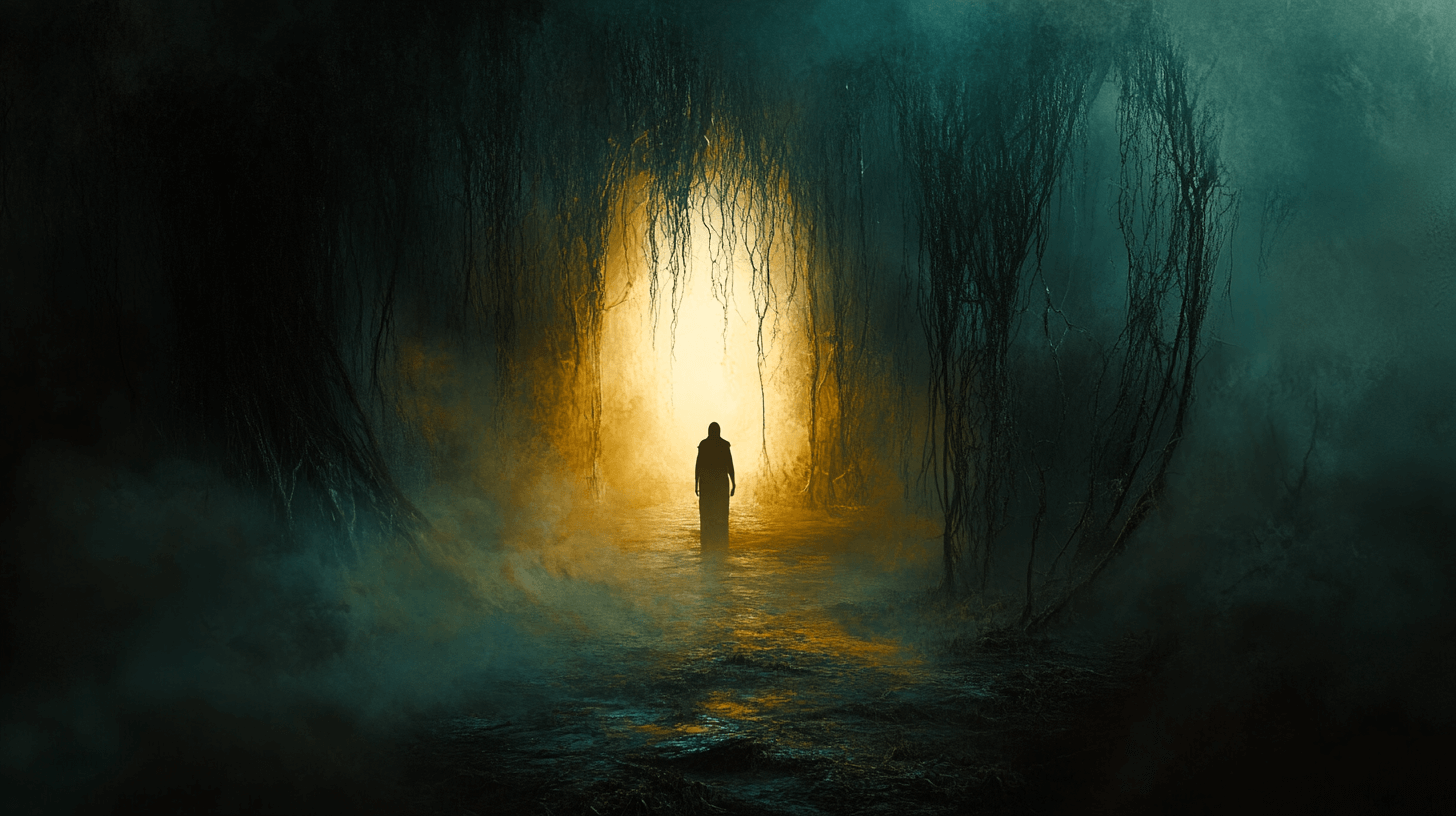
He throws the lightsaber away — not a strategic decision, not a calculation, but a nervous system choice. He drops out of reactivity and into something else. Something deeper than the fight response.
“I am a Jedi, like my father before me.”
That’s regulation under maximum threat. The entire system is screaming at Luke to fight, to survive, to destroy the threat. And he puts the weapon down. He chooses presence over reactivity, and he chooses to stay — unarmed, in the most dangerous room in the galaxy.
The Emperor responds exactly as you’d expect: if you can’t activate someone, you destroy them. The lightning begins.
And here’s where it happens.
The Tuning Fork
Vader watches his son being tortured. Luke isn’t fighting or reacting — he’s in agony but he’s present. He’s regulated enough, even while being destroyed, that his field is coherent. And that coherent field — one regulated nervous system in proximity to a dysregulated one — does what coherent fields do.
It reaches Vader.
Moreover, it reaches him through the one channel the Jedi said was dangerous: the family bond. Father and son. The biological connection that runs deeper than ideology, deeper than decades of armor, deeper than the suit. Co-regulation is powerful between strangers. Between parent and child, it’s seismic. The very attachment the Jedi prohibited is the attachment that saves the galaxy.
Something breaks through the suit — through the decades of survival programming, through the closed system. Anakin surfaces. Not because Luke argued with him or defeated him, but because Luke was the tuning fork. One person, anchored, in the room. And even a system as locked-down as Vader’s could feel it.
Vader picks up the Emperor and throws him into the reactor core. The closed system opens. The pod breaks.
And then the mask comes off. For the first time in decades, Anakin makes direct, unmediated contact with another human being. He sees his son with his own eyes — father and son, no suit between them. The interface is finally clean.
“Tell your sister… you were right about me.”
He wasn’t redeemed by fighting. He was redeemed by contact — by one person’s coherent presence breaking through the sealed system. Luke didn’t save his father with a lightsaber. He saved him by being the kind of person whose presence could reach through forty years of armor.
This is what the whole trilogy was building toward. Not the space battles. Not the Death Star. The moment in the throne room where one person chose presence over reactivity, and that choice rippled outward and changed everything.
The galaxy wasn’t saved by a weapon. It was saved by someone who had done enough of the work to stay regulated when everything was falling apart. And whose regulated presence shifted the one person whose shift could collapse the entire power structure.
The Earlier Map
If The Matrix is a map of where we are now — the technology-humanity interface, the pods, the race — then Star Wars is the map of the foundational work that makes the interface possible.
Star Wars says: there is a field, it connects everything, and you can learn to access it. But the training is hard and unglamorous and happens in a swamp. The real enemy is your own unexamined material, and you have to face it without weapons. Suppressing emotion isn’t strength — it’s the precondition for being manipulated by anyone who understands your wounds better than you do. Power without regulation destroys the vessel. And the moment that changes everything isn’t the battle. It’s the moment someone stays present.
The Matrix, arriving twenty-two years later, picks up where Star Wars leaves off. The internal work meets the external system. You’re inside technological infrastructure that’s harvesting your energy, the pods are closed, and the interface between human and machine is the critical variable. And Avatar, arriving a decade after that, shows you what it looks like on the other side: a fully connected system, every node online, the network functioning as it was designed to. Not a fantasy. A memory of something we lost and are trying to rebuild.
Three transmissions. Three decades. Same instruction, arriving in whatever language the culture could absorb at the time.
All three arrived through artists who described the creative process as received rather than constructed. All three were wrapped in the entertainment language of their era because that’s what the culture could absorb. All three landed with a resonance that exceeded anything their creators expected, because millions of people felt the truth underneath the fiction even when they couldn’t name it.
And all three point to the same conclusion: the work is internal. The adversarial framing is a distortion. The moment of transformation is the moment you stop fighting and start being present.
Why It Matters Now
We are forty-seven years past Star Wars and twenty-seven years past The Matrix. The instructions arrived. The maps were delivered. Some of us used them. Not enough of us did.
The race I described in The Race We’re In is the consequence of that gap. Technology kept accelerating while human developmental capacity lagged behind. The foundational inner development that Star Wars was pointing at didn’t happen at scale. And now we’re inside the Matrix, trying to do the Dagobah training while the system is already harvesting our energy and the clock is running.
No wonder it feels so intense. We’re doing phase-one work in a phase-two environment — building foundations while the building is already on fire.
But the instructions still hold. The Force is still the Force. The training is still the training. The cave still contains only what you take with you. The tuning fork still works. One person, regulated, in the room, still shifts the field.
The work hasn’t changed. The stakes have. And the swamp has Wi-Fi now.
This piece is part of a series:
The Race We’re In — The structural argument for why regulation isn’t self-care. It’s species-level infrastructure.
What The Matrix Was Actually About — The pods, the machines, Neo’s real superpower, and the system-level map.
What Star Wars Was Actually About — The foundational map. The training, the shadow, and the moment that actually changes everything. (You are here.)
What Avatar Was Actually About — The vision. What a connected system looks like, and the choice in front of us.
If you’ve been doing the work and want to understand where your capacity is still leaking, a Terrain Session maps the landscape beneath the surface so you can see what’s operating underneath.
Learn about the Terrain Session →
If you want a practice to begin with right now, The Business of Outrage includes a breathwork exercise. Consider it your first day on Dagobah.
Bookmark this for the next time you’re activated and your system is screaming at you to fight. Read it instead. Then put the weapon down.
If this reframe landed for you, send it to someone who grew up with these stories.
The resonance they felt as kids was real. This is what it was pointing at.
This piece was developed in collaboration with AI. The original trilogy didn’t have that option. But the work it was pointing at is the same work, regardless of what tools you use to articulate it.